It’s easy to find waterproof LED strips for wet environments or outdoor applications, which are typically IP67 waterproof silicone tube ones. They come with silicone clips and can be mounted on walls or ceilings with screws. However, this is not very convenient, so why not add double-sided adhesive to the back? This way, you can stick them anywhere you want. Because the surface of the silicone tube is so smooth, it’s a challenge to add double-sided tape. But today we will teach you how to do it.
Why it’s hard to stick adhesive tape to silicone tubes?
The silicone tubes are so smooth that most adhesives cannot bond well. The common double-sided tape or glue often peels off after some time, especially in humid or high-temperature environments. So we need to do some special processing on them.
The method To Attach Adhesive Tape On Them
To solve this issue, please follow the steps below.
Clean the surface of the silicone tubes to which you want to attach adhesive tape. You can not use the water to clean them directly. You need the isopropyl alcohol clean bag to remove dust, oil, or residue. You can get the 3M clean bags shown in the picture below:
Apply an adhesion promoter on the surface and wait 10 minutes. We recommend 3M 94 primer.
Apply the tape. We recommend the 3M 4229P high-bond double-sided tapes.
Press firmly for around 30 seconds to ensure proper adhesion.
Wait 24 hours for maximum bonding strength before mounting.
Attaching adhesive tape to a silicone tube can be challenging, but with the right method, you can achieve a secure and long-lasting hold. You can install them in aluminum LED channels, ceilings, walls, and other areas, including wet environments or outdoors. It will make things easy. If you need them for your outdoor applications, please contact us to get a quote.
In the interior lighting design, the small change or improvement can make a huge difference in aesthetics and functionality. Today we will share with you the newest LED light channels with regressed cover design for the designers seeking clean, glare-free illumination with a premium finish. But what exactly is regressed cover, and what is useful in lighting design? Let’s check its benefits, and applications.
What does Regressed Cover Mean?
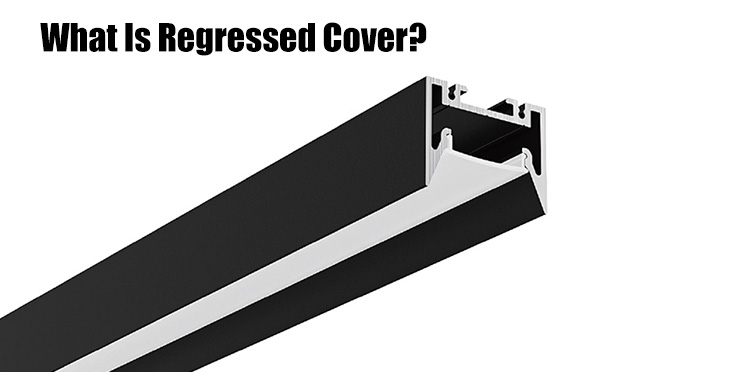
The regressed cover is a design name that allows the diffusers or lenses to be set back slightly from the edge of the LED channels. Do not like the full-mounted or dropped covers, regressed cover design creates a deliberate shadow gap-a subtle recess that hides the LED strips while enhancing visual depth.
Why Regressed Cover Useful In Lighting?
Enhance Architectural Detail
The regressed cover design creates shadow gaps, which help define edges and layers in modern interiors. It can be used widely in:
Cove lighting ( indirect ceiling illumination)
Wall- washing ( evenly lit vertical surfaces)
Reduce Glare & Improves Comfort
By recessing the diffusers, harsh LED spots are concealed, making the light softer and more comfortable. They are suit for offices, retail displays, museums, galleries, etc.
Hide hardware and LED strips for a seamless appearance.
Work with plaster-in or suspended profiles for invisible installations.
Pair well with dimmable LEDs for adjustable brightness.
The applications of the aluminum LED channels with regressed cover design
Residential Lighting
Kitchen under-cabinet lighting
Floating ceiling designs
Commercial & Hospitality
Hotel lobby accent lighting
Retail shelf spotlighting
Restaurant mood lighting
Architectural Features
Shadow gap detailing
Where you can get them?
In our online store, we offer seven types of LED light channels with regressed cover designs to meet your needs. You can use them as pendant lighting or recessed on ceilings or walls. They not only hide the LED source but also create glare-free illumination for a cozy ambiance. It’s time to upgrade your home’s lighting. Let’s do it.
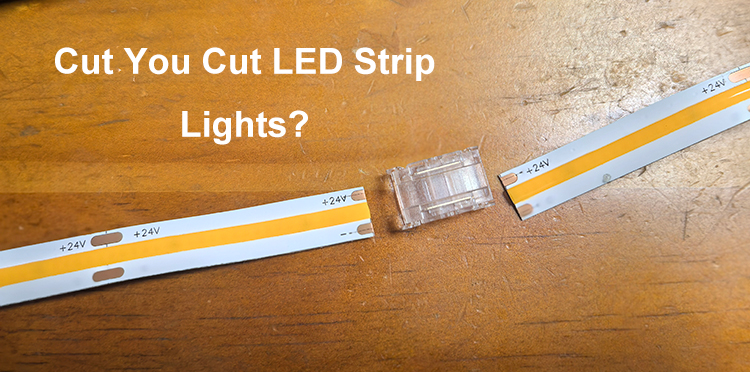
Can you cut LED strip lights? Can we cut LED strip lights? Both questions are among the most frequently asked by our customers. Yes, most of them can be cut to your desired length, but you need to cut them from the cut points marked on the LED strips. If you cut from the wrong place will damage the circuit and the lights will not work. Below are everything you need to know.
Where You Can Cut Them?
Not everywhere on the LED tapes is safe to cut; the correct cutting points are scissor icons or copper points, usually where you can safely separate the strips.
For some mini size LED strips, you will need to take off the protector paper of doube-sided adhesive tape to reveal the copper points.
Why Cutting Points Matte
Cutting from the wrong place will sever the circuit, making the rest of strip lights unusable.
Each cutting point aligns with the tape’s electrical design, ensuring the rest LEDs work normal.
How To Cut LED Tape Lights Properly
Step 1: Locate the cutting points: Look for scissor symbols or copper dots indicating safe cut points. If you are still not sure about it, please ask your seller to confirm.
Step 2: Use the right tools: You can use sharp scissors or a utility knife to cut them down.
Step 3: Test both parts after cutting: Connect both parts to LED power suppy to ensure them work normal.
Step 4: Seal The Ends: For the waterproof versions, you can use silicone glue to seal the ends for waterproofing and protect exposed wires.
The Ways To Reconnect Cut Strip Lights
Solder Wires On Them: You can solder wires on them, need to pay attention to + and – terminals.
Use the Solderless LED Connectors: This is the easiest way to reconnect them. They are allowed to connect cut strip lights together or connect to wires. There are straight, L-shaped, and T-shaped ones available.
Frequency Questions:
Can You Cut Any LED Strips? A: Yes, most LED strips can be cut. If you are unsure, please contact your seller or us to confirm. For the waterproof or mini size ones, you need to be careful.
What Can I Do If I Cut In The Wrong Place? A: Many small sections connect together to form one long piece of LED strips. If you cut from the wrong place, you need to remove the small section. And others will work normal.
Can You Reconnect LED Strips After Cutting? A: Yes, you can solder wires on the copper dots or use our solderless LED connectors to reconnect them together or connect to a power supply or controller.
Will Cutting Lose Brightness? A: No, it will not. If you find the brightness weak at the end of the LED tapes compared to the beginning. You got the voltage drop issue. Check our article to fix it here: How To Fix Voltage Drop Issue For LED Strips?
Conclusion
Cutting LED strips is simple if you know how to do it. Whether you’re customizing lighting in your space or for DIYs, knowing where you can cut and use the sharp tools will help you finish in seconds.
Have you tried to cut flexible LED strips? Share your questions in the comments!
The baseboards are the metal or wooden pieces that allow you to install them along the bottom of the walls. You can use them to enhance the aesthetics of your place but also prevent water to the drywall. The main material is wood, MDF, or PVC. They are in different heights, styles, and colors. Some are plain, while others have decorative designs. Now, more and more customers will choose baseboards that allow the integration of lighting to add lighting to the floor. Not only for safety but also to enhance the ambiance.
Why Need To Add Baseboard Lighting?
The skirting lighting is a simple way to enhance your place, below are the benefits you will get.
Better Ambiance
You can add various static color or dynamic LED strips into the baseboard channels to soft lighting to create a warm, inviting glow at floor.
Improved Safety
Add lighting to the floor will allow you to see at night without turning on the main lighting. They will brighten the dark areas around the baseboard to prevent slip and Collision.
Modern Look
Most of them can integrate into the baseboard seamlessly for a sleek and minimalist finish. It will make your room feel more luxurious.
Space Illusion
The lighting at the baseboard level makes your place look bigger. It draws the eye upward, creating depth.
Energy Efficiency
The skirting base lighting uses less power than traditional wall lights. It will save power and reduce your power cost.
How To Add Them?
To add the skirting board LED channels to your place, you need to consider the facts below:
LED Aluminum Channels
Various styles and colors of LED profile channels are available on the market with different installation methods. Please check and confirm the details before you start your project. There are black, white, and silver color ones available; you can also customize the color from us. Take the ones that can be blended into your space. If there are corners, you also need to consider how to install them for corners.
LED Strip Lights
After you select the LED channels, then you need to confirm the width of the LED strips you can use. Because our baseboard profiles have a downward lighting design and do not need bright lighting for the toe kick lighting, you can add the 2700K&3000K warm white or 4000K natural white LED strips inside, no matter if they are COB or SMDs, do not worry spots.
Power Supply & Controller
Because the LED lights work on low voltage, so you also need power supply. Calculate the power consumption of the LED lights before you purchase LED drivers. The output power of power supplies should have at 10-15% redundancy for long, stable runs. To change the color, adjust the dynamic effects or color temperature, you will need to add dimmers or controllers. You may need the following other products: extended wires, connectors, remote controls, silicone glue, etc. If you are not sure what you will need, tell us how you will lay them out, and we will provide a list of everything you need.
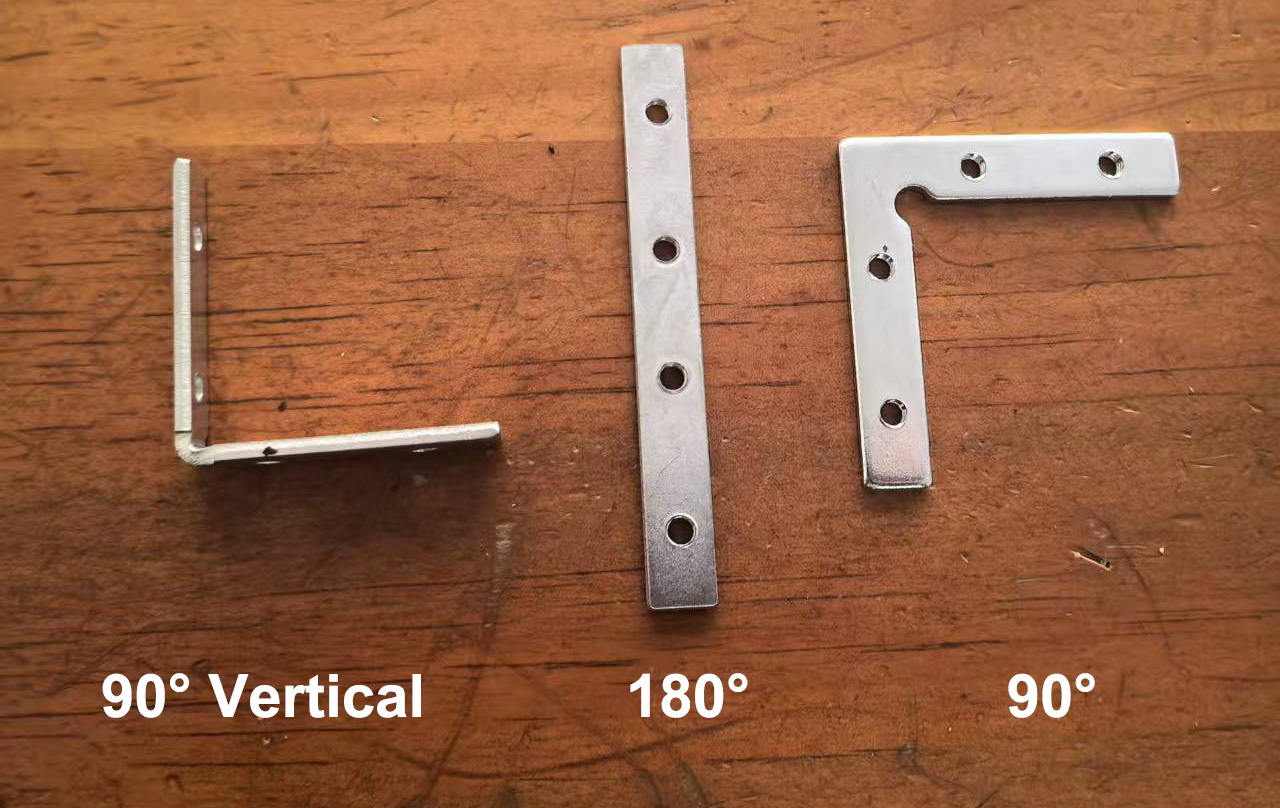
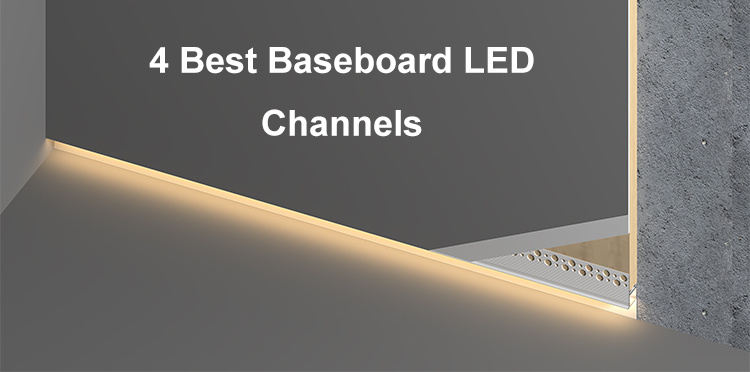
Those LED light tracks can be seamlessly integrated into the drywall. They have a downward lighting design and have a reflective cove. The lighting will shine indirectly onto floor for a soft and even lighting. They are made of constructured aluminum material with black anodized surface treatment for anti-oxidation. The stock length is 2 meters per piece and easy to cut to any size for your needs. There are 90° and 180° couplers and corner connectors for corner installation. You can use them for baseboard/skirting/Toe Kick lighting.
The ALP187 is another plaster-in aluminum LED channels we recommended. They are small in size and lightweight. You can easy mount them on the bottom of walls and bring soft lighting onto the floors. They are made of 6063-T5 aluminum alloy and with white powder-coating for anti-oxidation. The stock length is 78″ and can be cut to any size. The inner width is 10.3mm and allow the max width of LED strips to be 10mm. You can add our 3000k warm white COB LED strips to create a soft and uniform lighting.
Those drywall LED channels have a long profile allows the lighting indirect to the walls, ceilings, or floors. They can be seamlessly integrated into the 5/8″ drywalls for a modern look and deliver uniform lighting. They are made of 6063-T5 extruded aluminum alloy with powder-coating finish for anti-oxidation and extended lifespan. The stock length is 2 meters per piece and can be cut to any size. The Ledbe light channels accommodate LED strips up to 12mm wide; you can add our dotless COB strip lights as the light source for even, spot-free lighting. There are 90°, 90° vertical, and 180° couplers sold separately for straight or angled connections.
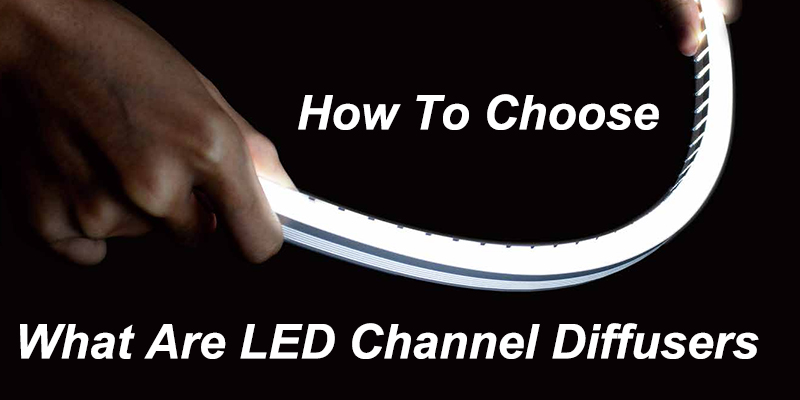
Those drywall LED channels are bendable, which allow them to be bent and along the curved surfaces under staircases, baseboards, rounded walls, arched pathways, etc to add lighting on the bottom part of walls. The silicone diffused covers are included, which will diffuse the lighting evenly without spots. The silicone diffusers are bendable and the max length is 50 meters per roll, which allows to create a long continuous linear lighting along your baseboard.
Final Thoughts:
It’s easy to add to the baseboard or skirting board in your space with our aluminum channels. They not only provide a professional and sleek finish but also brighten dark areas and offer soft, even lighting to enhance both aesthetics and safety.
Now use the code ” NEW ” to order any type of LED profiles on ledbe will get 5% off.
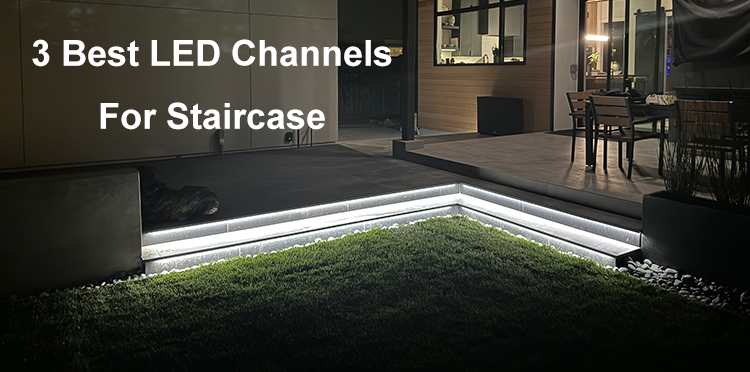
Add lighting to your staircase not only enhances safety but also gives your home a modern and finished look. It’s not easy to light up the whole staircase with traditional lights, considering the staircase is inclined and long. But with our LED light channels for staircase and high-density COB strip lights, it will be easy. We selected the 3 best LED channels for staircase lighting for you below.
ALP192 Handrail LED Light Channels
The ALP192 LED channels have black spray, are heavy and solid, and have up-down lighting designs. They can be mounted on the walls beside the staircase to create warm and even lighting. They are not only LED strip channels, but also can be worked as handrail. They are perfect for home and business to add a modern and stylish look. The stock length is 2M per piece and can be cut to any size for your desire.
There is only one type of diffuser available: PC diffused cover, which are made high-quality material, anti-yellowing, for perfect lighting distribution. The inner width of the light slots is 12.3mm/0.48″, which allow the max width of strip light is 12mm. You can add our high-density COB strip light to create continuous and uniform lighting.
The end caps and screws are included, which allow easy to mount them on the walls. The 180° connectors are sold separately, you can use them to connect the handrail LED channels for straight connection.
2. Black Aluminum LED Channels For Step Lighting
The ALP024-R staircase LED channels can be mounted on the steps to provide downward indirect lighting to stairs, which are designed to provide a professional, glare-free finish. You can install them in cinemas, homes, offices, malls, theatres, etc. They have black spray finish for anti-oxidation and longer lifespan. The stock length is 2meter per piece and can be cut to any size. The inner width of the lighting slot is 13.3mm, and the max width of the tape light is 13mm; you can add our high-density dotless dual white LED strips as the light source to create a uniform and smooth lighting.
There is only one type of diffusers available: PC diffused cover, anti-yellowing, and perfect lighting distribution. It with clip-in design, you can easy to press into the aluminum channels easily. The anti-skid covers are included, and you can insert them into the top slot on the LED channels for anti-slip.
3. Step Nosing / Tile Edge LED Lighting Channels
Those tiled stair nosing aluminum channels have a solid structure and black spray. They can flush mounted into the nosing of the steps, then add LED strips into the light slot to provide uniform lighting to brighten the steps. There are two models available for 8mm and 10mm tiles. The diffusers will diffuse the lighting evenly without visible light dots or dark areas no matte you add SMD or COB strip lights.
The standard length in stock is 2 meters per piece; you can cut to any size you want freely. You can also cut the ends to 45° and spice them together for corner installation. The lighting direction is downward, which provides uniform indirect lighting that to the steps for anti-glare. You can add waterproof LED strips inside and use them in a wet, rainy place indoors and outdoors.
Final Thoughts:
Adding lighting to your staircase is a small project but with a big return. It not only lights the dark areas but also improves safety. Whether you want a practical nightlight or to make your space more modern, they can do it.
When you try to add lighting to the limited space in the toys, models, cars, trucks, shelves, etc. You will find the traditional LED strip lights will be difficult to do. Because it is impossible to fit a regular size light strip into a small space. But today we will introduce 5 ultra-thin LED strips that will work in the tiny space too.
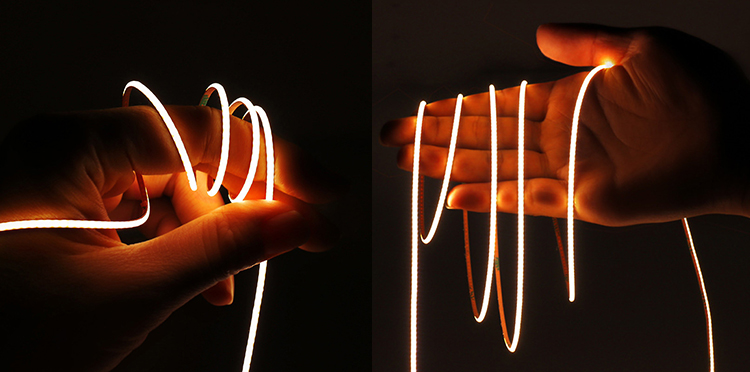
This is our narrowest LED strips that sell on our website, 480PCS LED chips laid on the 2mm width PCB board, flexible and bendable. They will provide exceptional brightness and uniform illumination in a tiny tube. The ultra-slim strip lights can be used in the limited spaces like cars, toys, models that you want to achieve seamless and minimalistic lighting.
There are only 12VDC products available, and we only provide several emitting color products: Blue, 6500K Cool White, 4000K Natural White, and 3000K warm white. The super slim COB LED strips are cuttable, and the minimum cutting length is 25mm/0.98″. The back has double-sided adhesive tape and allow to stick them into the place you want. They are only provide IP20 non-waterproof version, so only can be used indoors.
Those are the hottest sale narrow LED strips on our websites, and our customers gave them a very high response. There are 480PCS LEDs laid on the 2.7mm width PCB board, flexible, bendable, and cuttable. Both ends have black&red wires, easy to connect to power supply to light up or light dimmer to adjust the brightness. The back has double-sided adhesive tape and easy to stick to the place you want to install. They are excellent choice for the space is limited, especially in tight corners, shelves, etc.
We provide DC3.7V, DC5V, and DC12V versions, you can use batteries, power bank and wall adapter to light up the DC3.7V and DC5V slim COB LED stripes. They are perfect for projects that need to move, like cosplay, toys, etc. There are many color options available: warm white, natural white, cool white, blue, ice blue, red, green, pink, orange, yellow, addressable, etc for various applications. The 90Ra+ colo rendering index and high-density features allow they do not need extra diffuser for excellent efficiency and color consistency.
Those 4mm super slim COB LED tapes have high-density feature that will create a dotless, no dark area, and uniform illumination in the tight space. They are 5 meters per roll and minimum cutting length is 25mm or 50mm. Both ends have black&red wires to connect light dimmer easily to adjust the brightness for various scenes.The back has double-sided adhesive tape and easy to stick to the place you want to install.
We provide 5V, 12V, and 24V versions of 4mm COB tape lights. You can use batteries and a power bank to light up the 5V versions for mobility. Not only the regular white colors, we also provide the other single colors like red, green, pink, yellow, purple, blue, orange, etc. You can choose and install them in the tight space and light the dark areas.
Those slim LED strips are addressable. 160PCS small SMD LEDs laid on the 2.7mm width PCB board. The slim design allow them can be fit into tight spaces without compromising brightness. With the individually addressable feature, they will create a dynamic and fantastic lighting in your DIY projects. Both ends have JST SM 3P connectors allow them easy to connect to SP105E pixel LED controllers to achieve hundreds of dynamic lighting effects.
There are DC5V and DC12V version products available, you can light up the DC5V slim LED tape by batteries or battery pack. They are cuttable and the minimum cutting length is 12.5mm. You can cut to your deisred size for your project. The back has double-sided adhesive tape for easy installation.
The last one super narrow LED strips we recommended are dual white, which allow you to adjust the color temperature and brightness for various scenes. They have 576PCS of LEDs laid on the 4mm PCB board. The high-density feature allow them to create bright and dotless linear lighting. With two color of LED chips allow you to adjust the color temperature from 2700K warm white to 6500K cool white.
They are 12V and 24V version products available, you can choose them for your projects in cars, furnitures, cabinets, cars, toys, etc. They are cuttable and the minimum cutting length is 27.78mm. The back has double-sided adhesive tape for easy installation. Both ends have 3P wires can be connected to the CCT LED controller to light up and control the light setting.
Final Thoughts
With those super slim LED strips, you can easy to add lighting in tight spaces. They can be cut to custom lengths to fit specific project requirements. Whether you are looking to enhance the ambiance of your cars, or want to add dynamic lighting in the models or toys, those ones will offer a versatile and efficient solution.
When you try to search LED strips on the internet, you will see the ADs of sheet lights, which are similar to LED tapes but not the same.They are new products that not all people know. But they are hot sales and are welcomed by more and more users. So today, let me tell you everything about the sheet lights.
What are Sheet Lights?
Like its name, the sheet lights have an ultra-thin structure and sheet shape. The SMD LEDs are arranged on the dual-layer PCB boards evenly to make them flexible and bendable. Multiple connectors are soldered on for easy power or connection to each other. There are cutting lines on the board to make them cuttable, and you can cut to your desired size following the cutting lines. Those sheet panels will create a bright and even glow, highly efficient and customizable for applications, especially as backlighting under marble countertops, in advertising boxes or signs, under shopping windows, etc.
2. The Benifit Of The Sheet Panels:
Flexibility And Customization: Because the LEDs on the flexible dual-layer PCB board, which make them bendable. The light sheets are cuttable and linkable, which allows them are easy customize for various projects.
Lightweight & Slim: The thickness is only 8mm, which makes them lightweight and slim like paper. They can be installed in limited spaces.
Uniform Illumination: The high-quality LEDs on the PCB board are evenly to create uniform and shadow-free lighting, making them perfect for high-end applications, especially backlighting.
Conveniently Linkable: The LED sheets have extra power adapters, allowing them to connect easily for large projects, cut to the desired size, or bent to the DIY shape.
Longer Lifespan And Energy Efficiency: The LEDs are packaged with pure gold wires and large-size chips to make them have longer lifespan and higher energy efficiency. The double-layer PCB to ensure stable electrical performance.
3. What color products are available?
There are many color products available on the market, you can take the single color, dual white, RGB, RGBW, RGB+CCT, individually addressable, and addressable.
4. Where we can use them?
There are IP20 non-waterproof and IP54 surface coated waterproof products available. You can use them in lightboxes, signages, retail displays, backlighting in signs, marble countertops, etc. You can use the IP54 waterproof products in the wet environments like shopping windows, etc.
Architectural Lighting: They can be installed in ceilings, walls, and floors, you can add diffused cover above the sheet lighting to get a dotless and uniform illumination.
Retail Displays: Good option for backlighting in signages, advertisements, and showcases.
Interior Design: Enhances aesthetic appeal in homes, offices, etc.
5. What Sizes Are Available? There are two standard sizes available: Rectangle(490*245mm/19.29″*9.65″) and Square(250mm*250mm/9.84″*9.84″). There are extra signal and power adapters on them, so you can connect them together for large projects or cut to small pieces and power on.
6. How You Install Them To Power Supply And Controller?
There are multiple power adapters and signal adapters(For addressable products), which allow you to connect them to power supply to power on or connect to controller to adjust the brightness and color temperature, or set the static colors or dynamic modes. You also can solder wires on the copper points and connect to LED driver or controller if you cut them to a very small piece. The accessory bag includes connection wires for easy installation.
7. How can we install them?
There are two methods to install them. The Sheet Panels have double-sided adhesive tape on the back side and they have screw holes on. After clean the surface of the place you want to install, you can remove the protector paper and stick on. Or you can use screws to mount them. The screws and screw shims are included in the accessory bag.
8. Conclusion:
Those sheet lights will be a new great option for lighting, especially backlighting. No matter large lighting projects or small DIY ones. Flexible, bendable, cuttable, and linkable features allow them to be installed and arranged conveniently and quickly. No matter large or small projects, you can choose them. Now you can order them on our website and use the code “sheet-lights” to get 10% off.
Addressable LED strips are always the best option for creating colorful and dynamic lighting for residential or business spaces. They allow individual control of a single LED, enabling users to create dynamic lighting effects, patterns, and animations for holidays or decorations.
Recently, one of our customers talked to us about connecting LED strips up to 32 meters long without a gap for his project. Most RGBIC LED strips have 3Pin or 4Pin male and female connectors on both ends, and the standard length is only 5 meters per roll. If you connect them end to end, there is a gap between the LED strip lights.
To avoid any gap between them, we recommend removing the connectors on the ends and using transparent solderless connectors to connect them. You can do the same operations and connect them for a long line as long as you want. Like the picture below:
Before you connect the long-line addressable LED strips to the pixel controller, you must confirm that your controller supports that quantity of ICs; if it does not, you must change the controller or add an amplifier. Another problem we need to solve is voltage drop. Because the programmable LED strips have many small parts, when the electrical voltage travels through a circuit or conductor, a voltage drop occurs, which will cause the lighting to be uneven. The part close to the LED controller is brighter than the section away. To fix this issue, we recommend solder wires on the positive and negative electrodes and connecting the wires to the LED power supply, which will keep all LEDs working at the same voltage and brightness.
Follow the steps above to create a long line of colorful and dynamic linear lighting.
Learning how to calculate the power consumption of your LED strips is very important. This is related to the stability and safety of the entire system and the lifespan of the light strip. Another important factor is that if you know the power of the LED strips, you can choose the correct output LED power supply. Today let us check how to calculate it.
When you browse the details of the online store or purchase them from your local LED shop, they will show the power consumption or include it in the packing bag. see the pictures below:
Knowing the power consumption of each meter makes it easy to calculate the power consumption for the roll of LED strips. The formula is Wattage = wattage/meter * LED strips’ length.
For example, if the power of the LED strips is 8W/M and you own one roll of 5 meters of LED strips, the power composition of the roll of LED strips is 40W. If you want to use 5-roll LED strips for your project, the total power consumption is 200W.
After we know how to calculate power, we can learn to choose the correct LED power supply. Because the power supply contains many components, this will cause power loss in the power supply itself, so you cannot assume that the actual output of the power supply is the same as the wattage indicated on the power supply. There is a very important parameter that helps us choose a suitable power supply: power efficiency. See the picture below:
They are 1500W output Meanwell power supplies. For the 24V products, the power efficiency is 90%, so the actual output is 1500W*90%=1350W. You can use the same method to calculate the actual output power of the power supplies.
Conclusion: Calculating the light strip’s power consumption is necessary to select the appropriate power supply, controller, and other accessories. Now you have know how to do it, choose the correct ones for your new lighting project now.
If you do not have experience in interior decoration, adding LED strips to your ceiling or wall will be a big challenge. But it will be very easy if you know how to do it. So today, let us teach you how to do it.
What are the benefits of mounting strip lights on ceilings/walls?
Protect the LED lights: The common way to mount flexible LED strips on ceilings is to use double-sided adhesive tape or silicone clips. However, the exposed strip lights will be affected by the surrounding conditions, such as accidental bumps, spills, rain, etc., which may shorten the lifespan of the LEDs. So, if we could put them in something and keep them safe, it would extend the lifespan.
Consistent With Your Designs: Adding a light strip alone will look out of tune with the overall design, especially when the surface of the light strip has components of different colors and the light dots on the SMD light strip. So, hiding the light strip with a slot that matches your interior will make the overall design more beautiful.
Aesthetics: For a sophisticated look, hide strip lights on ceilings, walls, under cabinets, along baseboards, under shelves, etc. You can transform the space elegantly while keeping the interior design clear and gorgeous.
Anti-glare: High-density LED strip lights cause glare, making people’s eyes uncomfortable and even causing headaches. This can be fixed simply by adding a diffused cover to the LED strips.
The Ways To Hide Them:
Using the aluminum LED channels will make hiding the LED strips on ceilings or walls easy. There are four ways to install the LED channels on the ceilings or walls:
Suspended: The suspended installation method allows you to mount the LED strips on the ceilings to create a sleek and modern look, enhancing the overall design of your space. It also can add visual interest and depth to ceilings. There are lighting slots in the aluminum LED channels; you can stick the LED strips inside and clip in the diffusers to diffuse the light evenly, reducing harsh shadows and hotspots. This installation method can be in various configurations, such as straight lines, squares, or geometric patterns, allowing creative and customized lighting solutions.
Surface Mounted: This installation method is typically easy to install, often requiring only adhesive or screws. This makes them suitable for both DIY projects and professional installations. You can choose the various shapes and sizes of LED light channels, and they can be customized to fit different design aesthetics and applications for residential and business places. The flexible LED strips can be easily stick inside; the diffusers will diffuse the lighting smoothly without dark areas. They can provide direct lighting for task lighting. The aluminum channels will protect the strip lights from dust, moisture, and physical damage to extend their lifespan. The mounting clips are include, you can mount them on surface on walls or ceilings.
Recessed: The recessed installation methods allow them to integrate with the surroundings seamlessly. By being flush with the ceiling or wall, they will create a clean, unobtrusive look, enhancing the overall design of your space without visible fixtures. Those light channels will provide uniform lighting, reducing harsh shadows and ensuring a balanced ambiance. The recessed designs will minimize direct glare, making them suitable for areas where comfort and visibility are important, especially in the residential spaces.
Mud-in: The mud-in installation is another recessed method, particularly popular in architectural designs. It is designed to be embedded into the wall or ceiling, providing a flush, clean appearance that blends seamlessly with the surrounding surfaces, making it ideal for minimalist and contemporary interiors. The mud-in LED channels can be used for various purposes, including indirect lighting, accent lighting, and general illumination, allowing creative design possibilities.
How to hide LED strips using aluminum channels:
Choose the correct LED channels: Confirm the installation method for your LED strips and choose the right channels.
Measure and cut: Measure the area where you plan to install LED strips and cut the channel to the desired length using a saw or cutter.
Install LED channels: mount the aluminum LED channels on ceilings or walls.
Peel off the backing from the LED strips and stick them inside the channel, ensuring they’re properly aligned.
Clip-in the diffusers: snap or slide the diffused cover onto the channel to diffuse the light and hide the strip lights.
Connect to the power supply: connect the LED strips to the power supply and check if the lighting is working.
Check if everything is working correctly.
Installation completely.
Conclusion:
The easiest and fastest method for hiding LED strips on walls or ceilings is to use aluminum LED channels. They look sleek and modern and provide even light output and anti-glare. They are great for DIY lighting projects and interior lighting design in your space.