WLED Controller: The Ultimate Guide to Open-Source LED Magic
More and more threads mention WLED controllers, and they discuss them on Reddit, forums, and social media. I guess you want to know what they are, the benefits you will get, and where you can use them. Have you ever gazed at a mesmerizing RGB LED installation—a cove light that melts between colors, a desk that pulses with your music, or a holiday display that dances in perfect sync—and wondered, “How do they do that?” More often than not, the brain behind that brilliance is a humble yet powerful device called a WLED controller. Today, let’s learn all about WLED.
In this guide, we’ll demystify the WLED controller. We’ll explore what it is, the different types available, the compelling reasons to use one, its standout advantages, and the countless places you can bring your lighting visions to life.
What is a WLED Controller?
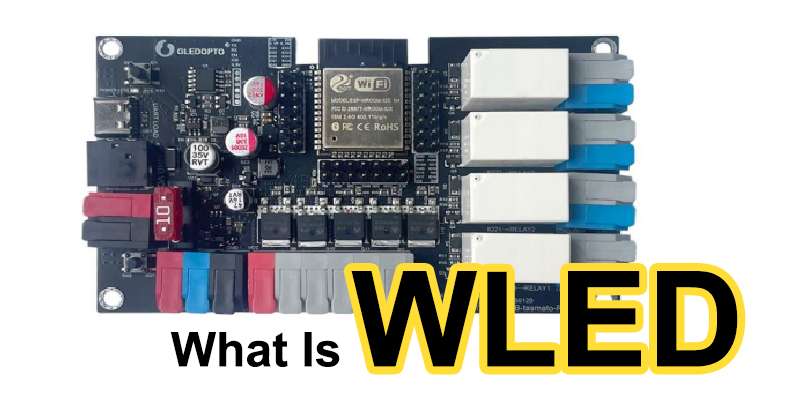
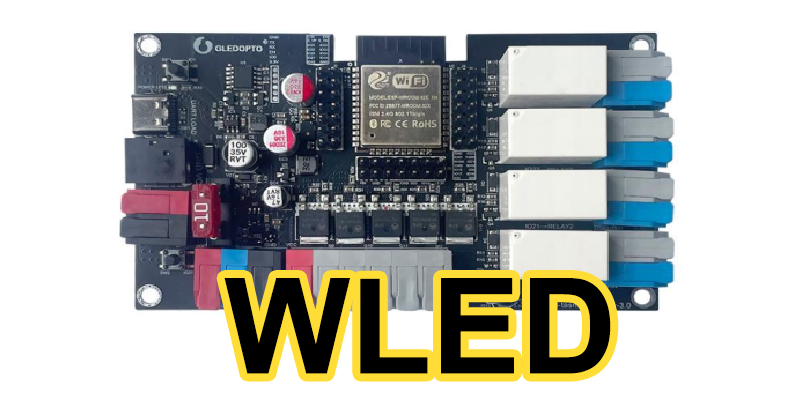
From the characters’ mean, WLED stands for white light-emitting diode. WLED is a term commonly used for LCD displays in televisions and mobile phones. But here we talk about WLED is a small circuit board (often based on popular microcontrollers like the ESP8266 (End of life) or ESP32) that runs specialized, open-source firmware called WLED.
” A fast and feature-rich implementation of an ESP32/ESP8266 webserver to control NeoPixel (WS2812B, WS2811, SK6812) LEDs or also SPI based chipsets like the WS2801 and APA102! ” ( https://kno.wled.ge/ )
Let’s break that down:
- The Hardware: This is the physical chip and board. Think of brands like Gledopto, Athomtech, NodeMCU, D1 Mini, QuinLED, or Athom. They are the “body” of the controller.
- The Firmware (WLED): This is the “soul.” WLED is a free, feature-packed software developed by Aircookie that you flash onto the hardware. It creates a web server, a WiFi access point, and handles all the complex protocols needed to control LED strips. You can download the app ” WLED Native ” on Android or App stores too.
In simple terms, A WLED controller takes user commands (from an app, voice, or schedule) and translates them into precise electrical signals that tell each individual LED on a strip (WS2812B, SK6812, etc.) exactly what color to be and how bright. It’s the conductor of your luminous orchestra.
Types of WLED Controllers
WLED controllers come in various forms, catering to different needs and skill levels.
1. DIY/Breadboard Controllers (The Tinkerer’s Choice)
- What they are: Raw development boards like the ESP8266 (NodeMCU) or the more powerful ESP32. They require basic wiring (soldering headers, connecting data/power wires).
- Best for: Hobbyists, learners, and those who want maximum flexibility and lowest cost. You have direct access to all GPIO pins on expansion boards.
2. Pre-Assembled/Pre-Flashed Boards (The Balanced Choice)
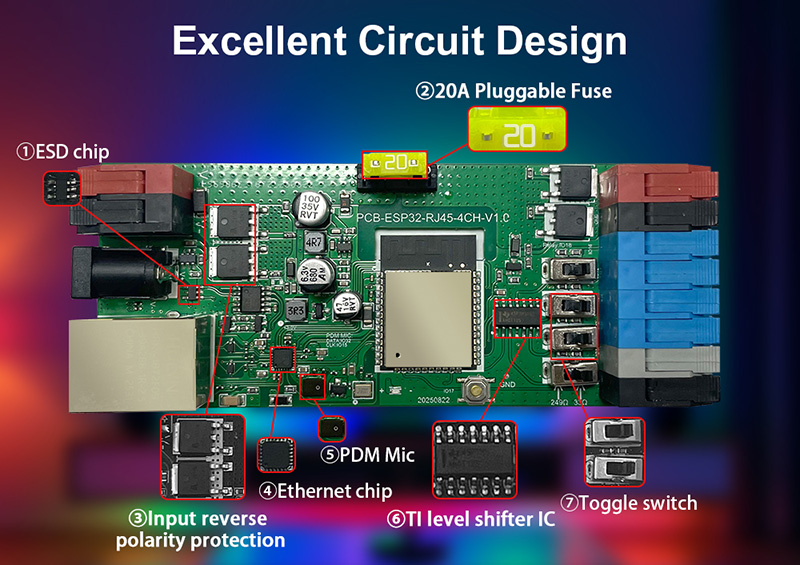
- What they are: Boards that come with WLED pre-installed and often include essential components like level shifters (for clean data signals) and fuses for protection. Examples include QuinLED-Dig boards (like the Dig-Quad or Dig-Uno) or Athomtech controllers.
- Best for: Most users! They offer a perfect blend of ease of use and capability. They are reliable, safe, and save you the hassle of initial setup while remaining highly configurable.
3. Enclosed/Commercial Units (The Plug-and-Play Choice)
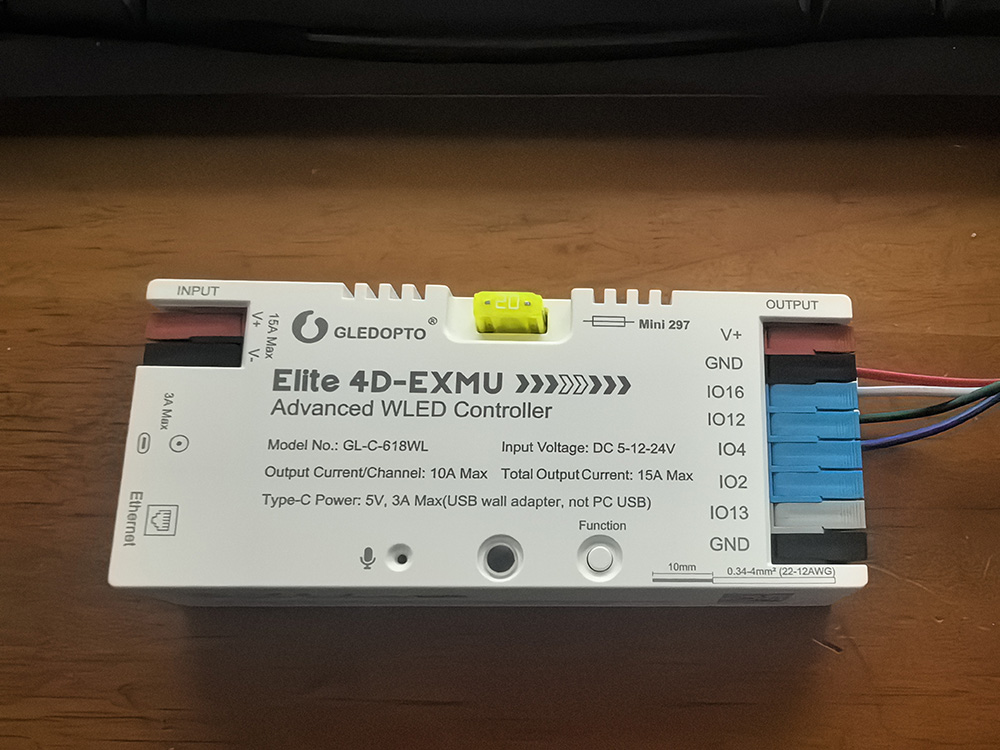
- What they are: These look like finished products—plastic or metal boxes with terminal blocks, buttons, and power connectors. Brands like Gledopto sell these on platforms like Amazon and AliExpress.
- Best for: Users who want a neat, ready-to-install solution, especially for permanent installations like home lighting. They prioritize aesthetics and safety.
4. Specialized/High-Power Controllers
- What they are: Controllers designed to handle massive installations. They feature multiple, synchronized outputs and can manage very high currents. The QuinLED-Dig-Quad is a prime example, capable of controlling thousands of LEDs across four separate channels.
- Best for: Large-scale projects, architectural lighting, professional installations, and advanced enthusiasts who need serious power and channel management.
The Reasons Why Use WLED? The Compelling Advantages
Why has WLED taken the DIY and smart home world by storm? Here are the key benefits you need to know:
1. Unmatched Feature Set for Free
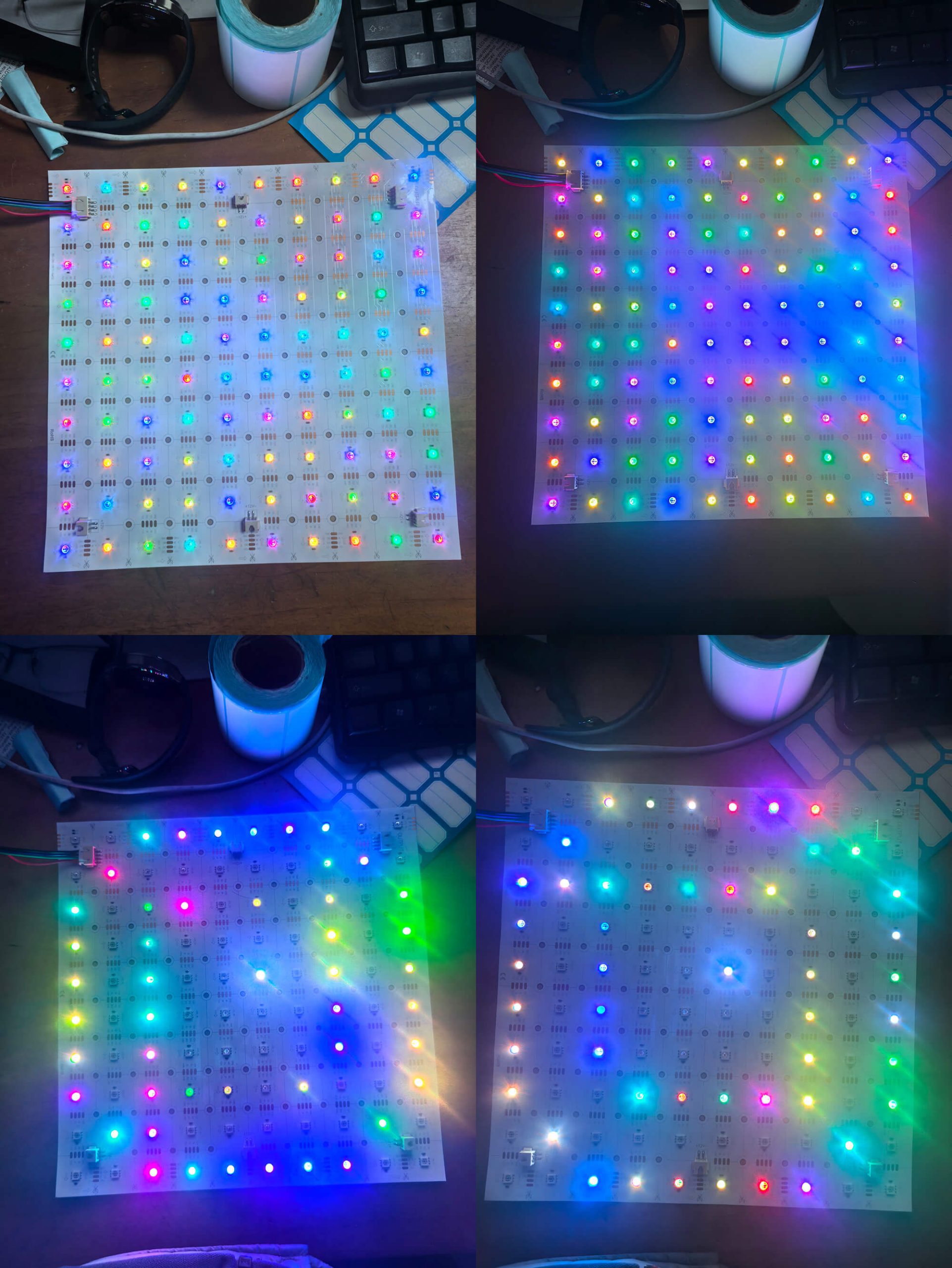
WLED is astonishingly rich in features: hundreds of animated effects, palettes, segment color control (which allows different parts of a single strip to be controlled independently), schedules, macros, and real-time audio reactivity. You get capabilities that rival or surpass expensive commercial systems.
2. Exceptional Ease of Use & Beautiful UI
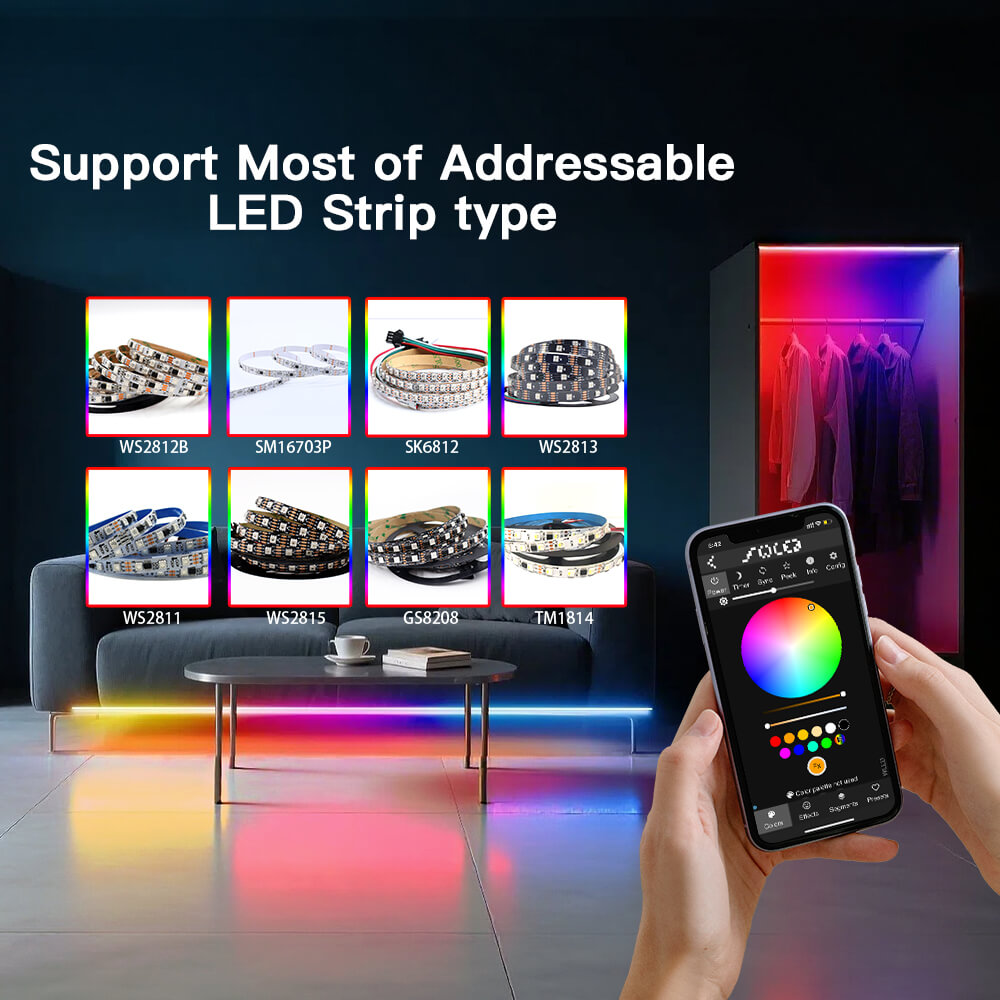
Once set up, control is a breeze. The responsive web interface is gorgeous and intuitive. There are also excellent mobile apps (like WLED Native ) and seamless integration with platforms like Home Assistant, OpenHAB, and Apple HomeKit via plugins.
3. Complete Local Control & Privacy
Unlike many cloud-dependent smart devices, WLED runs 100% locally on your network. Your lights work even if your internet goes down. You retain full data privacy—no lighting data is sent to a corporation’s server.
4. Massive Hardware Compatibility & Cost-Effectiveness
WLED supports a wide range of LED chip types (WS2812B, SK6812 RGBW, APA102, WS2811, WS2811F, WS2814A, WS2805, SM16703, etc.) and runs on inexpensive, widely available hardware. A basic setup can cost under $20, offering phenomenal value.
5. Active Community & Constant Innovation
Being open-source, WLED is driven by a passionate global community. New features, fixes, and improvements are released regularly. If you have a question, forums and Discord channels are full of helpful experts.
6. Deep Smart Home Integration
Through APIs (like JSON and HTTP) and native integrations, WLED plays nicely with everything. Sync lights with your security system, your morning routine, your TV (via Hyperion), or your music player.
Where Can You Use a WLED Controller? (Let Your Imagination Run Wild)
The applications are virtually limitless. Here are some popular ideas:
- Home Ambient Lighting: Install addressable LED strips behind TVs (bias lighting), under kitchen cabinets, in coves, or along stair treads for stunning, mood-setting ambient light.
- Desk & PC Lighting: Create an immersive gaming or work setup with desk backlighting that reacts to in-game action or system stats (using software like SignalRGB).
- Special Events & Holidays: Build reusable, programmable holiday decorations—Christmas, Halloween, parties—that are far more dynamic than static strings of lights.
- Art & Installations: Artists use WLED to create interactive sculptures, wall displays, and infinity mirrors.
- Commercial & Architectural Use: For cafes, studios, or even stage designs, WLED offers a professional-grade control system at a fraction of the cost.
- Garden & Outdoor Lighting: With proper waterproofing (IP67 strips and enclosures), you can illuminate gardens, patios, and pathways with dynamic color scenes.
- Music Visualization: Use the built-in microphone or audio from your network to turn any space into a synchronized light show that dances to the beat.
Getting Started: What You’ll Need
Ready to dive in? A basic starter kit includes:
- The Controller: An ESP8266 or ESP32 board.
- LED Strip: A 5V, 12V, or 24VDC addressable strip like WS2812B.
- Power Supply (PSU): A 5V DC supply rated for your strip’s total current (e.g., 60 LEDs/m can draw ~3.6A per meter!).
- Wiring & Connections: Wires, a soldering iron (or connectors), and possibly a logic level shifter (3.3V to 5V) for stable data over longer runs.
- A Computer/Smartphone: To initially configure the controller over WiFi.
The process is straightforward: Download the app to your mobile phone, connect the wires (Data, 5V, Ground) to the LED strips, power it up, connect to its Wi-Fi network, and configure it via the web UI to join your home Wi-Fi. From there, a universe of light is at your fingertips.
Conclusion: More Than Just a Controller
A WLED controller isn’t just a piece of hardware; it’s a gateway to a new dimension of light. It represents the democratization of high-end lighting control, putting incredible power, flexibility, and creativity into the hands of anyone willing to learn a little. Whether you’re a smart home enthusiast seeking local control, an artist seeking a dynamic medium, or simply someone looking for a cooler-looking room, the WLED ecosystem welcomes you.
So, what will you illuminate? The only limit is your imagination (and perhaps your soldering skills). Grab a controller, and start painting with light!