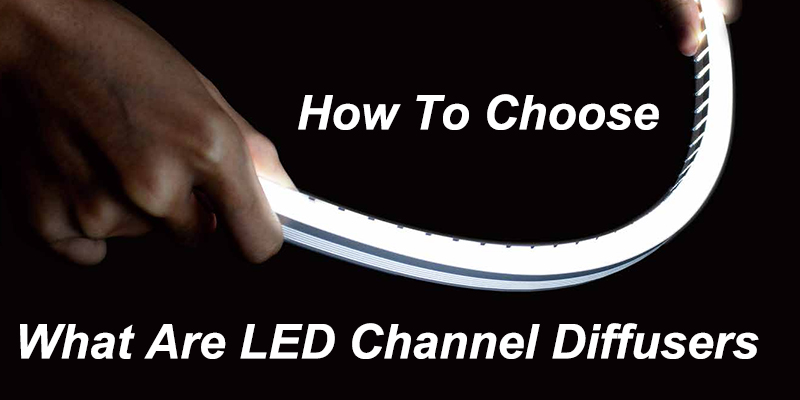
Tried to add some LED strip lights in your space, but you can not receive the seamless glow like others; instead, yours looks like a row of tiny dots. The reason is that you missed the important part: LED channel diffusers. This can be used to transform harsh, pixelated light into a soft, continuous illumination. Today, we will check what they are and how to choose the best one for your project.
What are LED Channel Diffusers?
The LED diffusers always work with aluminum channels. They are usually made from polycarbonate (PC) or acrylic(PMMA) and snap or slide over the top of the aluminum profiles. It will diffuse and spread the light emitted by LED strips evenly for soft, uniform lighting and eliminate the LED dots. Beyond that, they will protect the strip lights from dust, moisture, and physical damage, extending their lifespan.
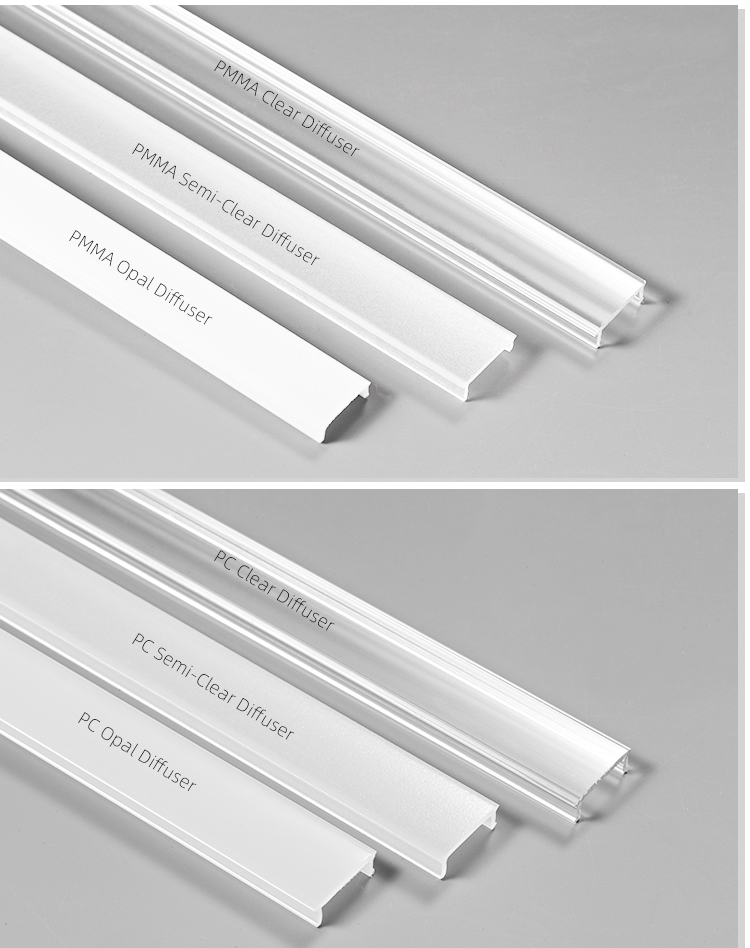
Types Of LED Diffusers
1. By Material
- PC (Polycarbonate): The diffusers are made from PC for greater durability, impact resistance, and heat tolerance. They will not be as easy to crack as the PMMA ones.
2. PMMA ( Acrylic): Light covers made of PMMA will be slightly more brittle but very clear and cost-effective. But they are easier to crack than PC covers.
3. Silicone: High-quality silicone always works with flexible aluminum channels, providing the most flexible option for lighting design.
2. By Optical Finish
- Frosted / Opal (Milky): These are the most popular choice. They offer strong diffusion, hiding the light dots while maintaining good light output. Ideal for most decorative and general applications.
- Clear / Transparent: Maximizes brightness and light transmission but does little to hide the LED dots. Best when raw output matters more than a uniform look, or when LEDs are placed far from the viewer.
- Semi-frosted / Light-diffusing: The middle level – better dot hiding than clear, brighter than opal/diffused.
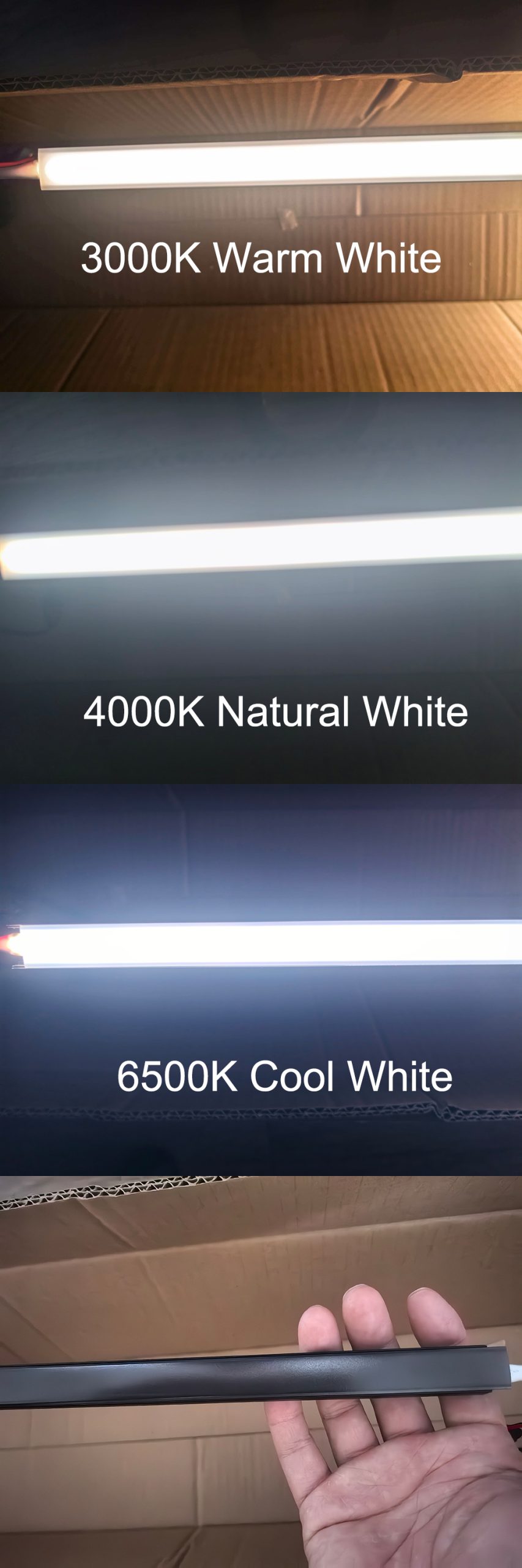
- Black / Smoke: They will conceal the LED strips when off for a sleek, invisible look, then glow when powered on.
| Type | Light Transmittance | LED Visibility | Light Diffusion | Best Use Case |
| Opal/Milky/Diffused | Lower ( 30-80%) | Not Visible | Maximum | Soft, uniform, hotspot-free light ideal for creating ambient mood lighting in residential and commercial spaces. |
| Semi-Clear/Frosted | High ( 70-85%) | Blurred | Moderate | Balanced choice for general indoor lighting where you want good brightness with some light softening |
| Clear | Highest (85-95%) | Fully visible | Almost none | Maximum brightness for task lighting, under-cabinet lights, or areas where the strip is hidden |
| Matte | Low to medium | Not visible | High | Similar to opal, but with a non-reflective surface finish. Often used for aesthetic purposes to eliminate glare. |
| Black | Low ( 30-50%) | Blurred to hidden | Moderate to good | Design-focused, dark-background installations |
Summary: Understanding both the material and the finish is key to making the right choice.
- PC Diffused/Opal/Matte Cover: The most durable option for creating a seamless, soft light. Best for ambient lighting where you don’t want to see individual LEDs.
- PC Semi-Clear Cover: A durable, balanced option. It offers good brightness while softening the light and partially hiding LEDs.
- PC Clear Cover: For maximum brightness and durability. LEDs will be visible. Great for task lighting or hidden areas.
- PMMA Opal/Matte Cover: Ideal for creating a soft, elegant, and uniform light with superior scratch resistance and no visible hotspots.
- PMMA Semi-Clear Cover: Offers excellent optical clarity with a balanced diffusion. A good choice for general lighting where both light quality and scratch resistance are important.
- PMMA Clear Cover: For the highest light transmission and clarity, with better scratch and UV resistance than PC clear ones. Best when optical performance is the top priority.
- Black PC Covers: Ideal for modern interiors ( black furniture, dark ceilings, grey walls), high-end retail, hotels, bars, and display cabinets where the fixture must blend in and become invisible when turned off.
Advantage:
- Uniform, dot-free light: They will diffuse the lighting evenly for uniform illumination.
- Reduced glare: Diffusing the light makes it easier on the eyes, especially in workspaces and living rooms.
- Physical protection: Shields the strip from dust, moisture, accidental knocks, and UV degradation.
- Professional, finished appearance: Hides messy wiring and adhesive edges for a clean, built-in look.
- Easier installation and alignment: The diffused covers can be easily snapped or slipped into the aluminum channels.
The tips for choosing the right diffusers:
- For close-up viewing (under cabinets, handrails), choose a frosted/opal diffuser and consider high-density LED strips to eliminate dots entirely.
- For maximum brightness where dots aren’t a concern, go clear.
- If you want the balanced result, choose the semi-clear ones.
- Match the profile shape to your mounting situation—recessed for a hidden look, or corner for angled surfaces.
- Ensure the channel width fits your strip width, and pick polycarbonate for high-traffic or outdoor spots.
- The PMMA ones are more easily cracked than the PC ones. If you need their strong, please choose the PC ones.
Conclusion:
The LED diffuser is a small but important part that makes an enormous difference. The difference between lighting that looks like a DIY afterthought and lighting that looks like it was designed by a professional. Whether you’re upgrading a kitchen, adding drama to a staircase, or outfitting a retail display, the correct diffuser will upgrade the lighting into that coveted, seamless glow, clean, comfortable, and beautifully finished.